Judge Jay Flowers
The Minds of Billy MilliganJudge Jay Flowers is the judge whose decisions guide William Stanley Milligan’s case through psychiatric examination, competency proceedings, and a trial on stipulated evidence. His role is decisive because the proceedings raise two distinct legal questions: whether Milligan can understand the trial and assist his lawyers at the time of the hearing, and whether mental illness deprived him of criminal responsibility when the charged acts occurred. Flowers’s rulings address these questions at different stages, then place the final determination on the evidence presented to the court.
Judicial role and the first psychiatric examination
Flowers enters the case during the early dispute over Milligan’s ability to participate in his defense. After public defenders Gary Schweickart and Judy Stevenson presented Dr. Willis C. Driscoll’s psychological report, they argued that Milligan could not assist them. Driscoll’s January evaluation had diagnosed acute schizophrenia and concluded that Milligan could not adequately understand events or counsel in his own behalf; the report recommended hospitalization for further examination and possible treatment. On January 19, Flowers ordered the forensic psychiatry unit of Southwest Community Mental Health Center to examine Milligan.
The order immediately raised a question about the status of what Milligan might tell the court-appointed clinicians. Schweickart insisted that information disclosed in the examination remain privileged and not be used against his client. Prosecutors Terry Sherman and Bernie Yavitch opposed that condition, while the defense threatened to advise Milligan not to participate. Flowers came close to holding the defense attorneys in contempt. The parties ultimately agreed that prosecutors could question Milligan about incriminating statements made during the examination only if he testified in his own defense. Flowers’s handling of the dispute enabled the evaluation to proceed under negotiated limits rather than resolving the privilege question in the defense’s favor outright.
Competency and the changing legal stakes
A later examination at Harding Hospital supplied the basis for a new ruling. After a brief competency hearing on October 6, 1978, Flowers found Milligan capable of standing trial and set December 4 as the trial date. The finding concerned his present capacity to understand the proceedings and cooperate with counsel; it did not determine whether he had been legally responsible for the offenses when they occurred.
The trial date also brought a change in Ohio’s insanity-defense law into focus. Schweickart asked that the case be governed by the law in effect at the time of the crimes, under which the prosecution bore the burden of proving sanity. The new law, due to take effect on November 1, would place the burden of proving insanity on the defendant. Flowers took the defense motion under advisement, noting that he knew of no decision directly addressing the issue, although courts had often allowed a defendant the more favorable of two legal provisions. He did not announce a resolution at that point. The uncertainty left the governing burden of proof an active question as the trial approached.
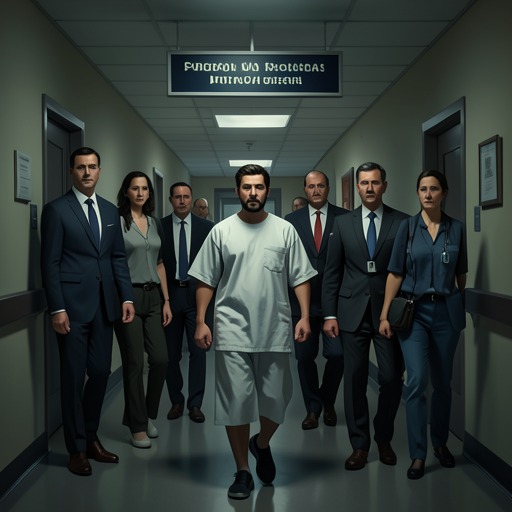
The Harding findings did not settle the case’s practical difficulty. Milligan became depressed in jail, and Arthur warned that his partial fusion might not hold in the hostile prison environment. On October 24, Flowers again ordered Southwest Community Mental Health Center to examine Milligan and report on competency. He allowed Dr. George Harding to attend at his discretion and directed that Milligan be transferred immediately from prison to Central Ohio Psychiatric Hospital. The subsequent report described Milligan as competent and able to assist his attorney, but also characterized his mental condition as fragile, with a possibility that the fused personality could disintegrate into previously evidenced dissociated personalities.
Pretrial arrangements and the hearing
As the case neared trial, treatment and legal procedure became linked. Harding Hospital was considered too expensive, and Dr. Cornelia Wilbur recommended Dr. David Caul of Athens Mental Health Center as a physician experienced in treating multiple personality. At the prosecution’s request, Flowers arranged a pretrial meeting with Probate Judge Richard B. Metcalf to clarify procedures under the new Ohio law. The meeting was expected to address more than procedure: Flowers would attend, and the participants would consider which evidence could be admitted by stipulation and where Milligan would receive treatment if he were found not guilty by reason of insanity. Flowers thus helped bring the question of potential hospital placement into the pretrial discussion, without the meeting itself constituting a verdict or a final placement order.
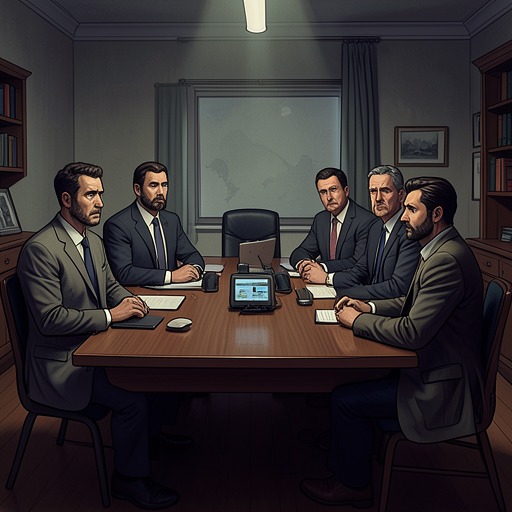
At the hearing, Schweickart told Flowers that both sides had agreed not to call witnesses or put Milligan on the stand; instead, the facts would be read into the record as stipulations. Flowers confirmed that the defense was not contesting the charges or denying Milligan’s commission of the crimes, except for the first count of sexual assault, and that the plea was not guilty by reason of insanity. This procedure made the psychiatric record, rather than live testimony, the principal basis for deciding the defense.
Findings and legal significance
Flowers dismissed the first rape count, citing the lack of corroborating evidence and the absence of a similar modus operandi. He then considered the insanity defense on the stipulated medical evidence. The doctors’ evidence established that Milligan was mentally ill at the time of the offenses and, because of that illness, could not distinguish right from wrong or refrain from the acts. Flowers found no evidence to the contrary and ruled that Milligan was not guilty by reason of insanity on counts two through ten.
Flowers placed Milligan under the authority of the Probate Court of Franklin County, struck his gavel three times, and adjourned. The disposition did not erase the charges or amount to a finding that the offenses had not occurred; it resolved criminal responsibility under the evidence and legal standard before the court, while shifting Milligan’s authority and care to the probate system. Flowers’s part in the case therefore rests not on a single pronouncement but on the sequence of decisions that separated present competency from responsibility at the time of the offenses, secured further psychiatric assessment, and converted a contested prosecution into a verdict based on agreed medical evidence.